Free Tatar assessment
tatar level test
For learners who want to check their current Tatar level free and receive a concrete practice recommendation.
Start practiceDetailsVocabulary grows faster when words belong to a situation.
Look up one word, compare its forms, and save a useful example.
Vocabulary grows faster when words belong to a situation. KeelAI connects Tatar word groups to dialogues, flashcards, tests, and repeatable practice.
Choose a practice format for your next goal: listening, speaking aloud, or reviewing vocabulary.
Free Tatar assessment
For learners who want to check their current Tatar level free and receive a concrete practice recommendation.
Start practiceDetailsTatar Dialogues
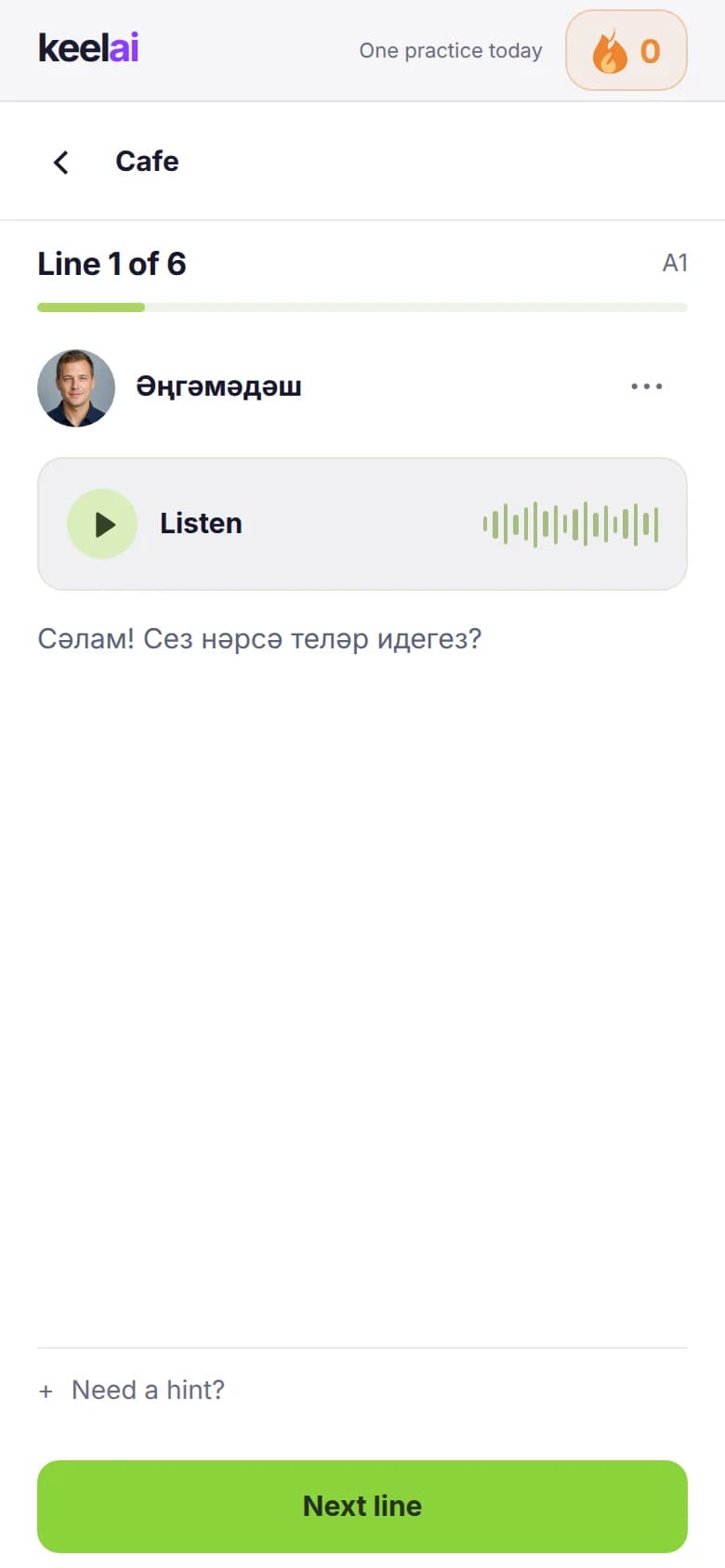
For learners who want short tatar listening scenes with tasks and feedback.
Start practiceDetailsAysylu Live Calls
For learners who want short live-feeling Tatar speaking practice with an AI tutor in Telegram.
Start practiceDetailsLearn Tatar online
For learners who need Tatar for heritage learning, Volga culture, family language, and Turkic language study.
Start practiceDetailsSee KeelAI in action
Start with the word groups that match your reason for learning Tatar: travel, work, family, relocation, culture, or daily life.
A word is easier to remember after you use it in a question, answer, correction, or short role-play.
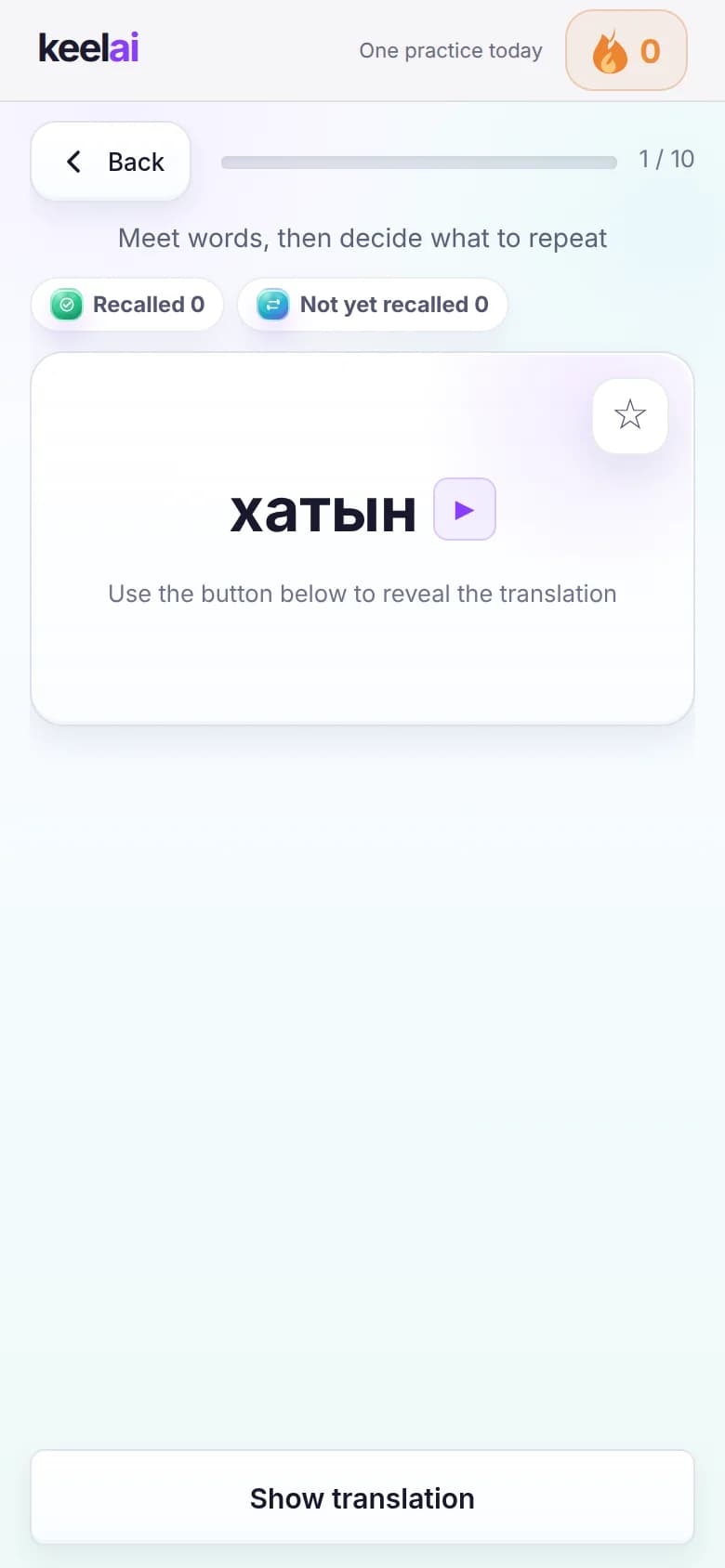
Use the Mini App for flashcards and tests so useful words keep returning after the first conversation.
Practice around situations that actually show up in life: conversations, travel, work, family, and everyday services.
Start with greetings, polite phrases, numbers, food, transport, and the first 200-500 words that make Tatar usable.
Use short role-plays before real conversations in Tatarstan and the Volga region: a shop, an appointment, a meeting, or a travel situation.
Save useful words from practice and review them through flashcards, tests, and levels in KeelAI.
Download KeelAI on iPhone or Android, or open it in Telegram. Choose Tatar and continue with the same set of learning tools.
Use prompts such as “practice a cafe order” or “help me introduce myself at work” and keep the level simple or challenging.
Turn useful corrections into vocabulary review, then repeat the same situation until it feels natural.
A first practical base is 200-500 words connected to your real situations.
Flashcards help retention, but words become useful when you also practice them in dialogues.
If this path is close but you need another language or practice format, choose a related route.
Ten languages, AI tutors, voice, reading, listening, and games in one product.
Free to get started · No credit card